Welcome to the Wilderness Basics Course
The Wilderness Basics Course is a comprehensive hiking and backpacking course offered once a year by the Sierra Club San Diego Chapter. Starting in January, students attend lecture classes every Tuesday night for ten weeks and put their skills to the test on a Day Hike and four Weekend Outings – a Car Camp, a Mountain/Desert Backpack, a Land Navigation Backpack and a Snow Backpack.
Upon attending the lectures, participating on the outings and passing the exam, students are awarded with a certificate of completion.
Course Overview
Class Presentations & Demonstrations
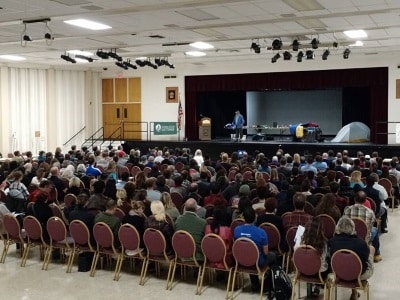
Tuesday night classes offer a variety of presentations and demonstrations on all aspects of hiking and backpacking. You will learn about: THE TEN ESSENTIALS, LAND NAVIGATION, FIRST AID, BACKCOUNTRY HYGIENE, CLOTHING & FOOTWEAR, EQUIPMENT & GEAR, PHYSICAL CONDITIONING, WATER TREATMENT, OUTDOOR ETHICS, ANIMAL ENCOUNTERS, FLORA & FAUNA, MULTI-DAY TRIP PLANNING, AND MORE!
Day Hike
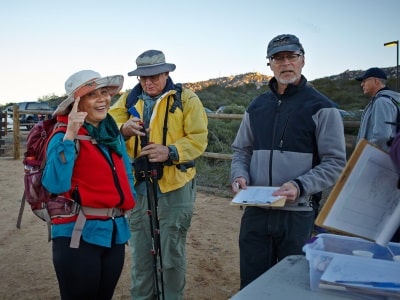
Day hikes on local trails will take place on the first Saturday and Sunday after the course starts. The main purpose of the day hike is to give you an idea of how physically fit you are in order to help you choose the appropriate outing trips for you. You will be timed and will be able to compare your time to the rest of the class by looking at a graph and seeing where you fit in.
Car Camp
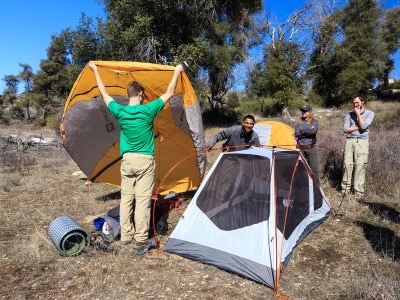
Our first overnight outing will be a primitive car camp departing San Diego on Saturday morning and returning Sunday evening. The trips range from extremely easy to very difficult, with each leader specializing in a variety of different subject matters such as star gazing, flora, wildlife, and the Kumeyaay of Southern California. On this outing, camp will be set up close to your vehicle and you will learn the basics of setting up your tent, sleep systems and cooking. During the day, you’ll explore the area on a hike and learn to read a topography map.
Mountain/Desert Backpack
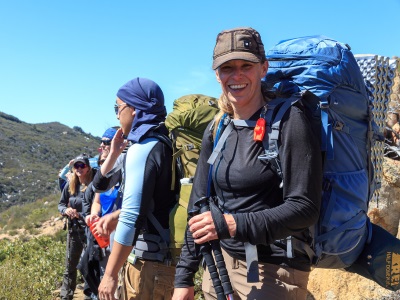
On our next outing we will we travel to Anza Borrego Desert or the local mountains. We will be leaving our cars and traveling by foot with everything we need to spend the weekend in our backpacks. Once we select our camp location for the night, we will go on a day hike to explore the area.
Land Navigation Backpack
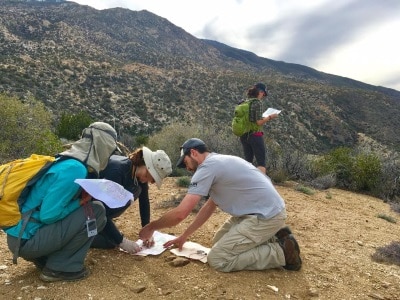
Our next trip is a Land Navigation Backpack, where we will spend the entire weekend practicing our map and compass or GPS navigational skills. By the end of the weekend, you’ll be very familiar with understanding how to locate yourself on the map, take a bearing in the field and on your map and how to get to a destination.
Snow Camp
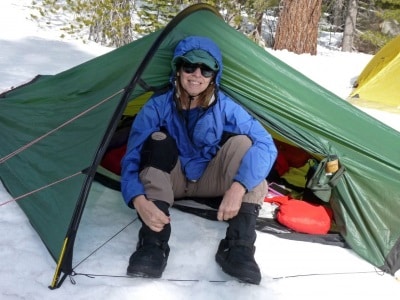
Our final outing is a backpack in the snow. You will have the option of traveling by snowshoe or cross-country skis. You will learn how to build snow kitchens, snow shelters/igloos and most importantly how to stay warm. This usually turns out to be everyone’s favorite trip!

Exam & Last Class Bash
On the last night of class, we test your knowledge with a multiple choice and true/false exam. After the exam, we all go to a local establishment to celebrate the experiences, new skills, and new friends that we’ve made.
Graduation & Reunion
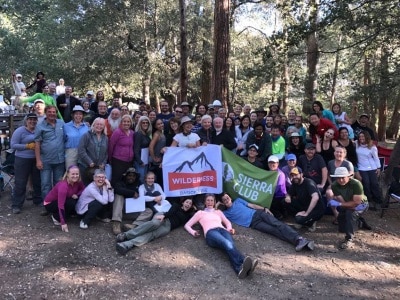
A few weeks after the course ends, we all get back together for a car camp with a Graduation Ceremony. Students who have completed the course are acknowledged with a certificate of completion and a Wilderness Basics Course patch. We will have a variety of activities including day hikes, camp fires and a dinner. Students can bring one friend or family member over 18+ to the Reunion.